Fashion is no longer just about garments, it’s about stories. Across global runways, designers are transforming collections into cultural narratives, weaving threads of heritage, community, and lived experience into the very fabric of their work. This shift reflects a world where audiences crave authenticity, identity, and meaning beyond aesthetics.
Once upon a time, runways were largely devoted to silhouettes, trends, and spectacle. Today, they serve as cultural stages. Through textiles, motifs, music, choreography, and staging, designers craft messages that transcend the clothing itself. Each collection becomes an act of storytelling: a declaration of belonging, an act of resistance, or a celebration of identity. In doing so, fashion not only elevates garments into art but also anchors them within deeper histories and collective memory.
This evolution was especially visible during New York’s September 2025 shows. Across the city, collections felt less like displays of fabric and form, and more like narratives unfolding in real time, conversations with the past, reflections on the present, and provocations for the future. The runway became a platform where designers didn’t just present clothes, but also offered perspectives, sparking dialogue about who we are and where we’re going.
Nazranaa: Indian Heritage Reimagined
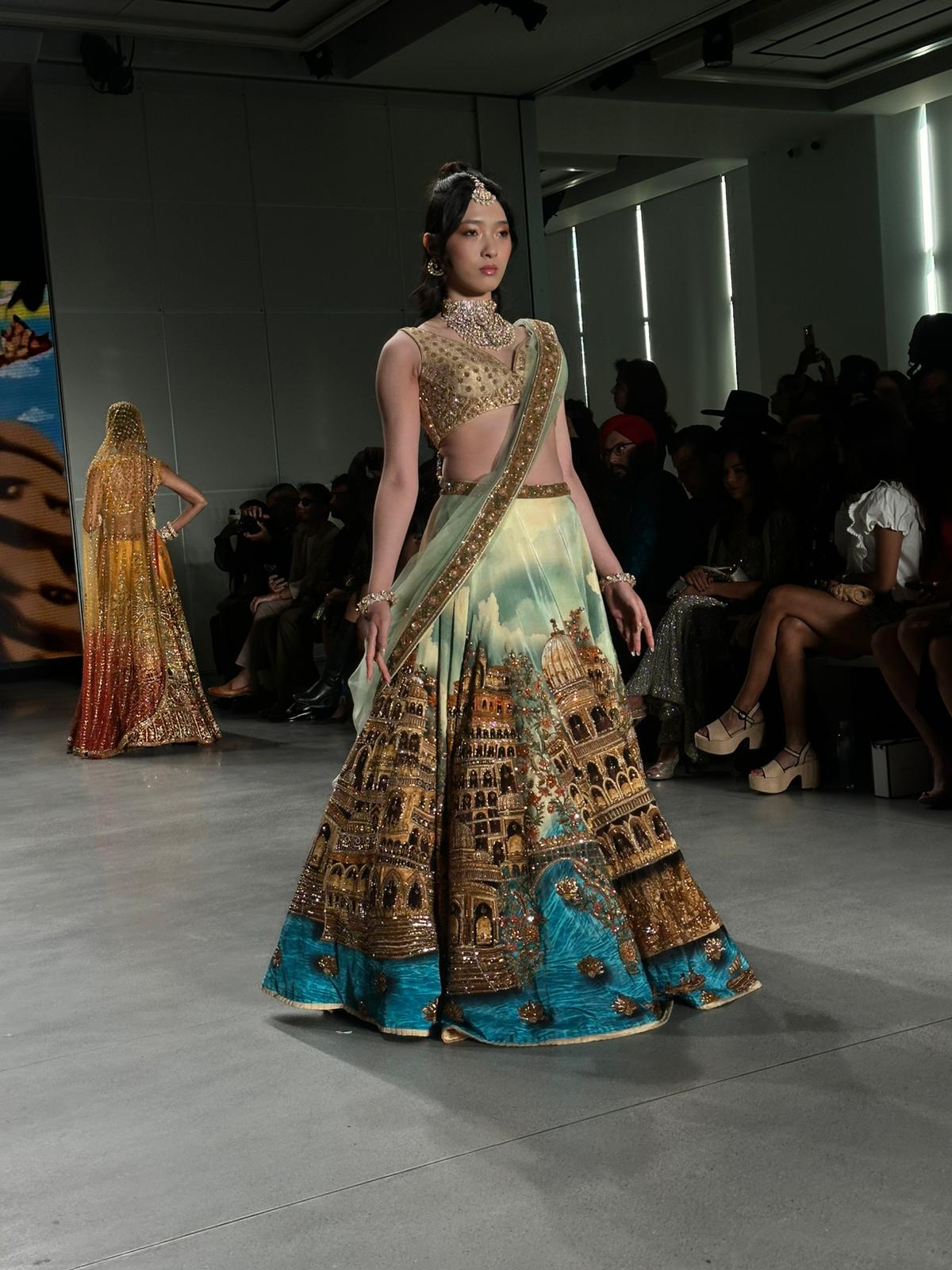
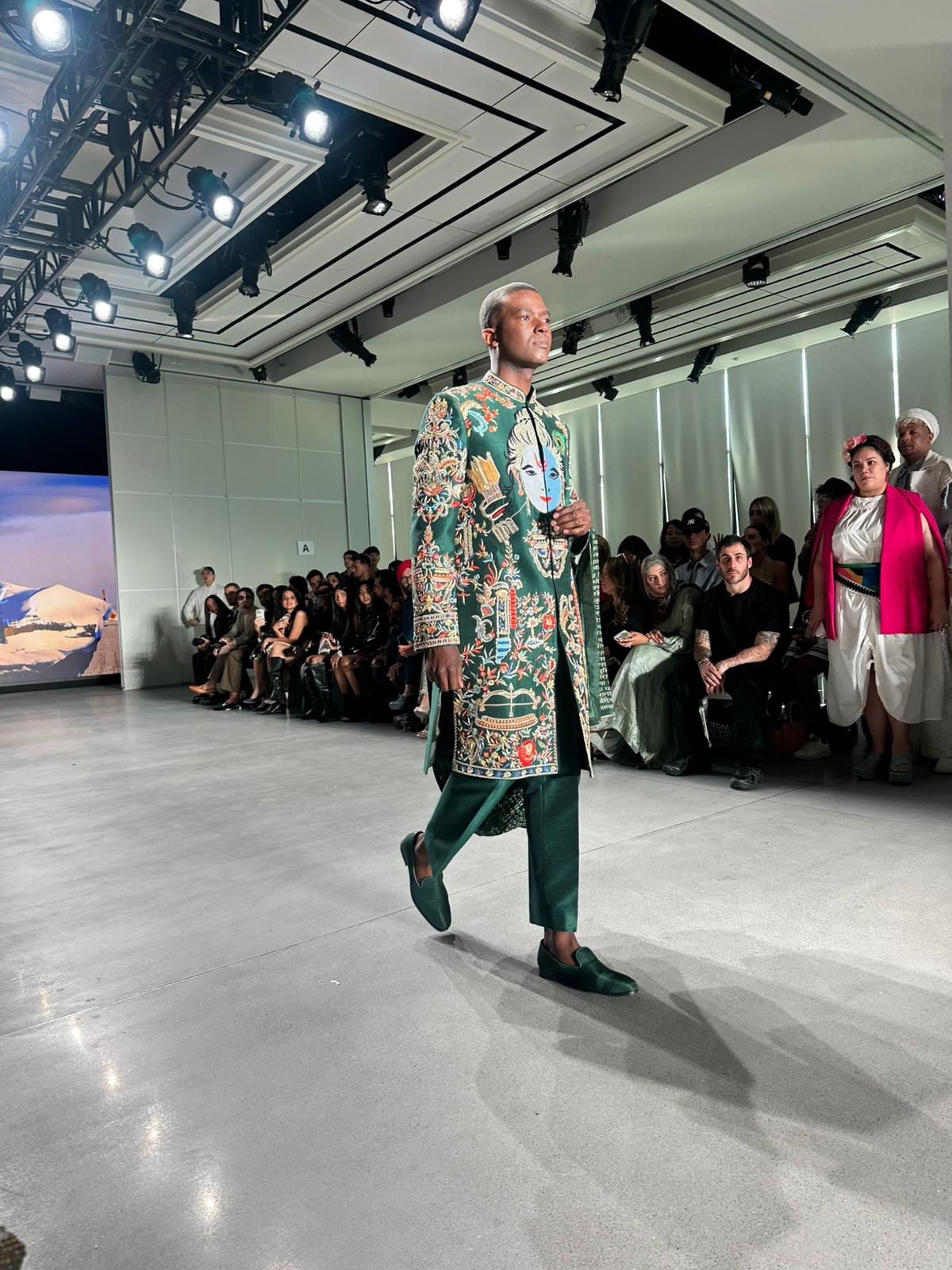
At the Global Fashion Collective showcase, Nazranaa presented the Samskriti collection, a tribute to Indian culture. Traditional lehenga silhouettes were adapted for the runway, enriched with beadwork and intricate detailing inspired by Indian temple architecture. Several pieces went further, with temple imagery and scriptural motifs painted or embroidered directly onto the garments, transforming them into wearable canvases of heritage. The collection merged bridal couture aesthetics with storytelling, each look evoking ritual, memory, and cultural pride. Nazranaa didn’t just present fashion; they celebrated identity, positioning their designs as vessels that carry history into contemporary contexts.

Nazranaa was not alone in reimagining tradition. Patricia Bonaldi of PatBO also drew from heritage, this time rooted in Brazil, to transform the runway into a stage for Latin identity.
PatBO: Celebrating the Latin Soul
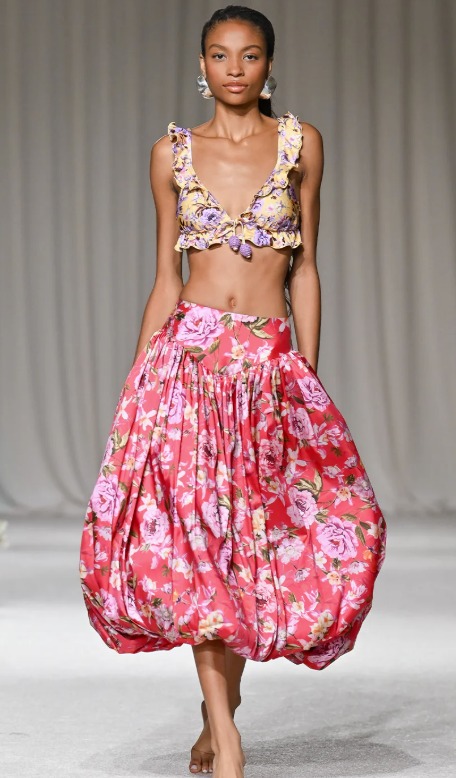
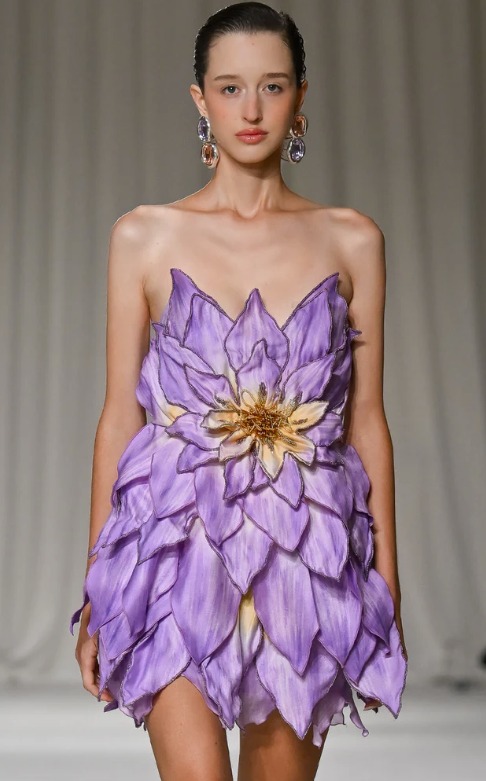
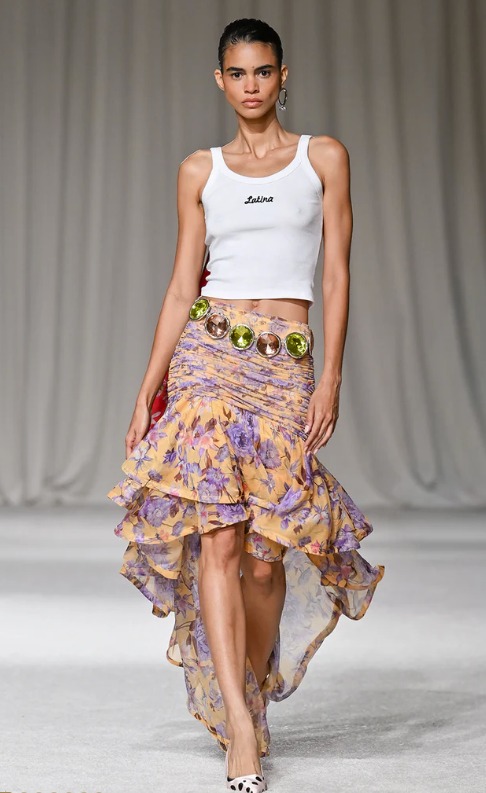
Patricia Bonaldi, founder of PatBO, grounded her Spring/Summer 2026 collection firmly in her Brazilian roots, turning the runway into a celebration of Latin identity. Known for her vibrant prints, meticulous hand embroidery, and dedication to artisan craft, Bonaldi used Latin Soul to showcase fashion as both spectacle and cultural vessel. The show overflowed with floral motifs, voluminous silhouettes, and kinetic details like fringe and beadwork — elements that echoed the exuberance and sensuality of Brazilian artistry. One of the most striking statements was a simple embroidered tank reading “Latina,” a reminder that this collection was not just about beauty but about claiming space and voice. By centering Brazilian craftsmanship and infusing it with modern glamour, Bonaldi positioned her work as a bridge between local traditions and global fashion conversations. Each look pulsed with a cultural heartbeat, underscoring that fashion today is as much about storytelling and community as it is about individual expression.
Where PatBO celebrated joy and sensuality, Rachel Scott of Diotima leaned into defiance and history, channeling the Caribbean spirit of Carnival.
Diotima: Carnival as Cultural Resistance
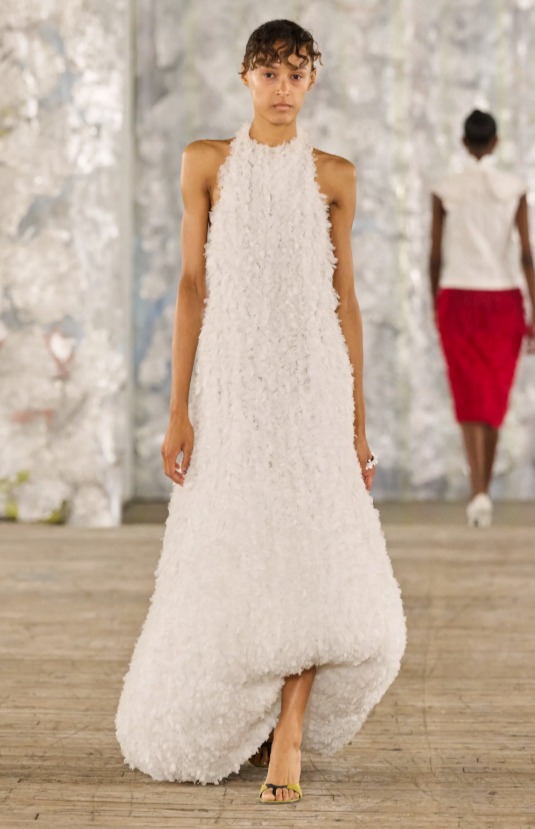
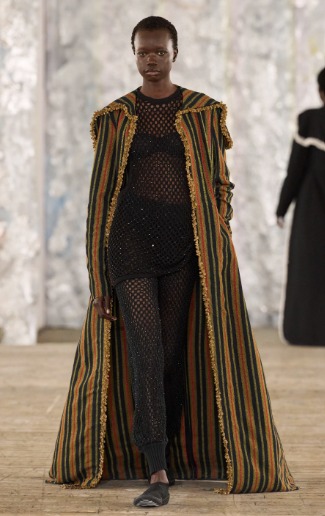
Rachel Scott’s Spring/Summer 2026 collection for Diotima transformed the runway into a living tribute to Caribbean heritage. Rooted in the spirit of Carnival, the show celebrated not only beauty and spectacle but also the deeper history of resistance and liberation that defines the festival. Scott, who often turns to history books and cultural texts for inspiration, grounded her designs in research as much as in lived experience. Fringe, tassels, crochet, and hand embroidery echoed the textures of Carnival costumes, while vivid shades of lime, guava, magenta, and red conjured the vibrancy of island landscapes. She balanced exuberance with precision, pairing kinetic embellishments with structured tailoring to underscore that joy and rebellion can coexist in design. By dedicating the collection to Trinidadian activist Claudia Jones, Scott made clear that her vision was as political as it was aesthetic. On the runway, Diotima captured Caribbean culture as both a sensory celebration and a radical act of self-actualization — proving that fashion can be a vessel for community, identity, and defiance.
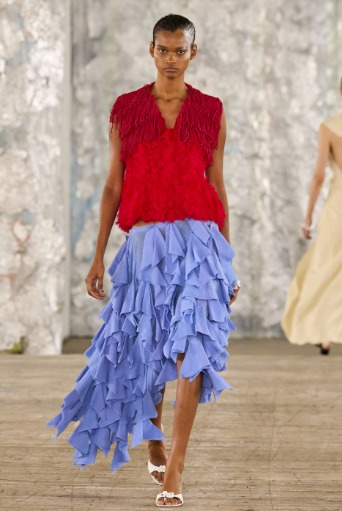
This dialogue between heritage and fantasy continued with Noé Bernacelli, who blended European couture traditions with Latin American craftsmanship.
Noé Bernacelli: Romance Rooted in Heritage
At New York Fashion Week, Noé Bernacelli transformed couture into a cultural stage. His Global Fashion Collective showcase fused high drama — gowns encrusted with jewels, sheer lace, and feathered capes — with references to his Peruvian and Italian roots. The romantic silhouettes were more than decorative; they drew on traditions of European couture while weaving in the ornate craftsmanship and storytelling spirit of Latin American heritage. By layering these influences, Bernacelli showed how fantasy on the runway can be rooted in cultural pride, turning garments into carriers of history and identity rather than just surface-level spectacle.
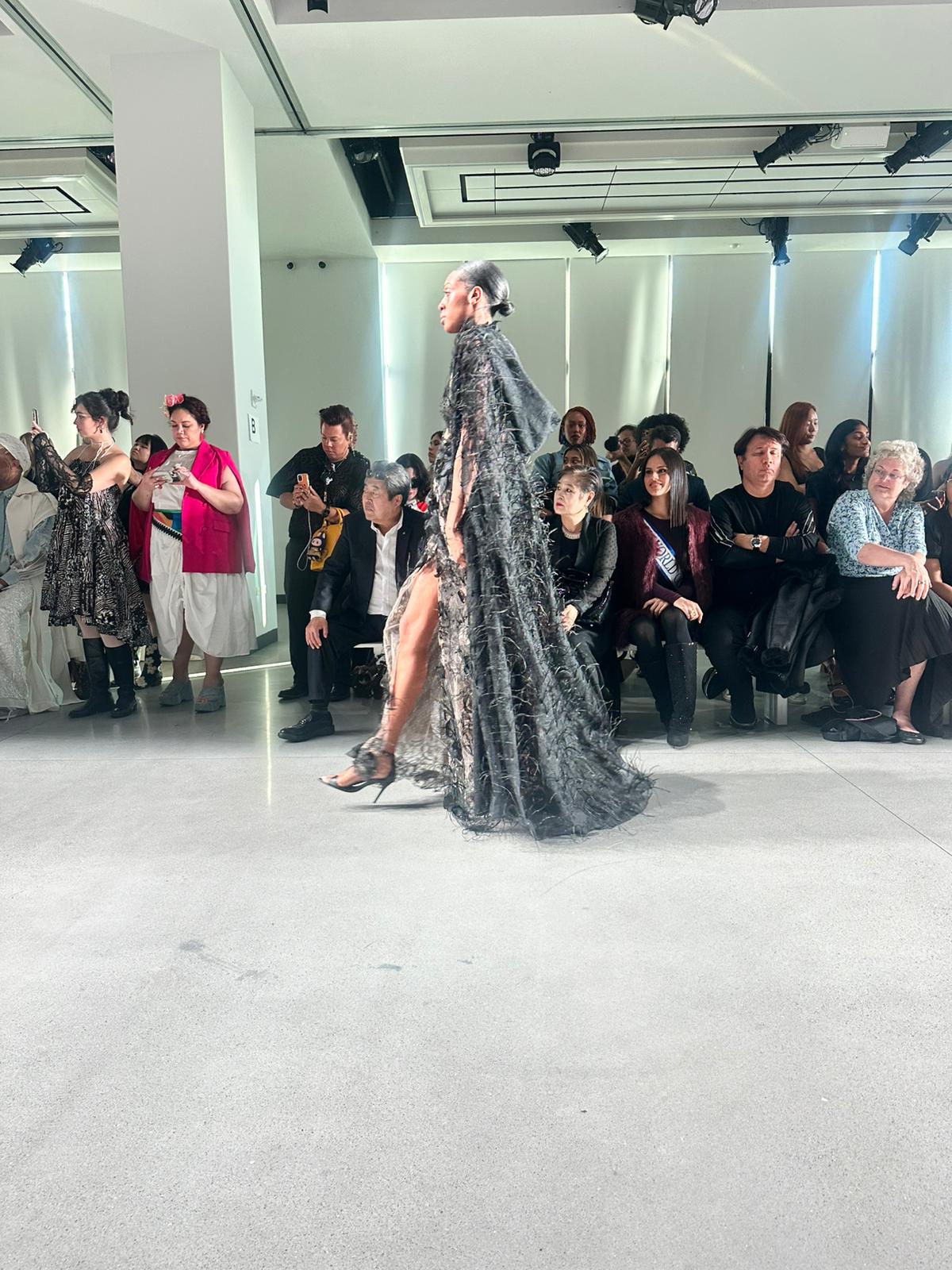
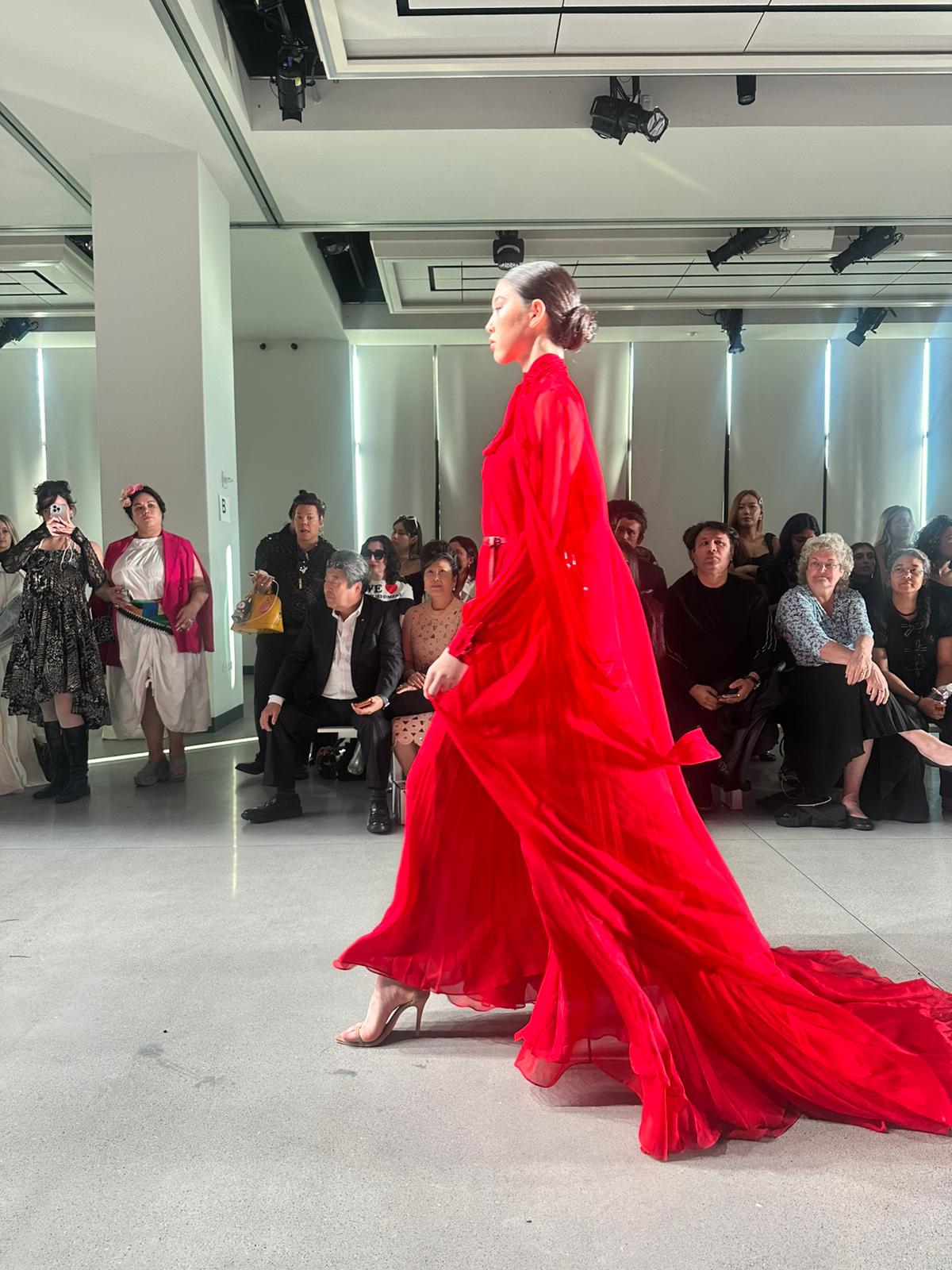
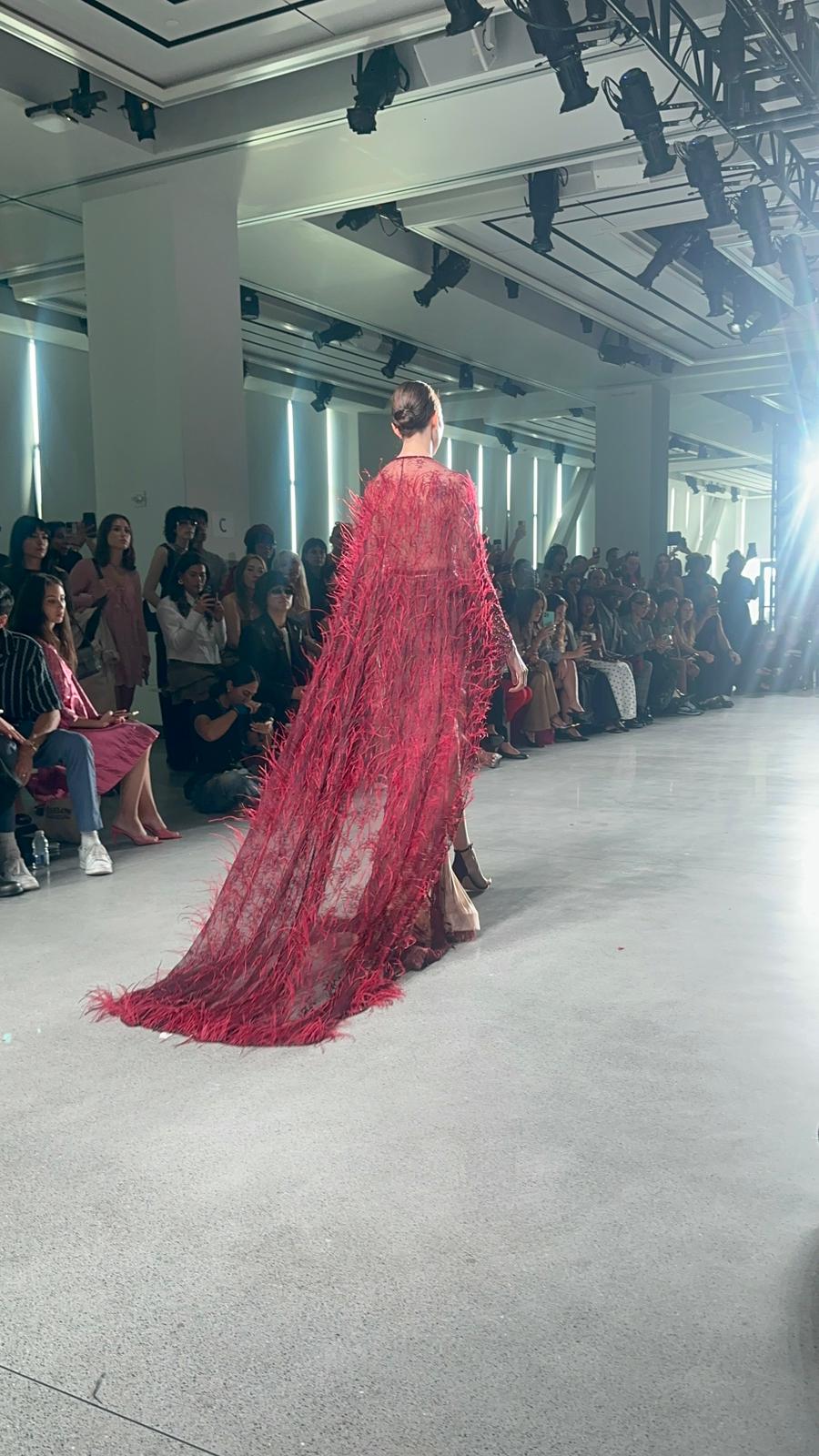
In contrast to Bernacelli’s opulence, Ashlyn Park presented a quieter meditation on culture, drawing on Korean traditions to explore memory and form.
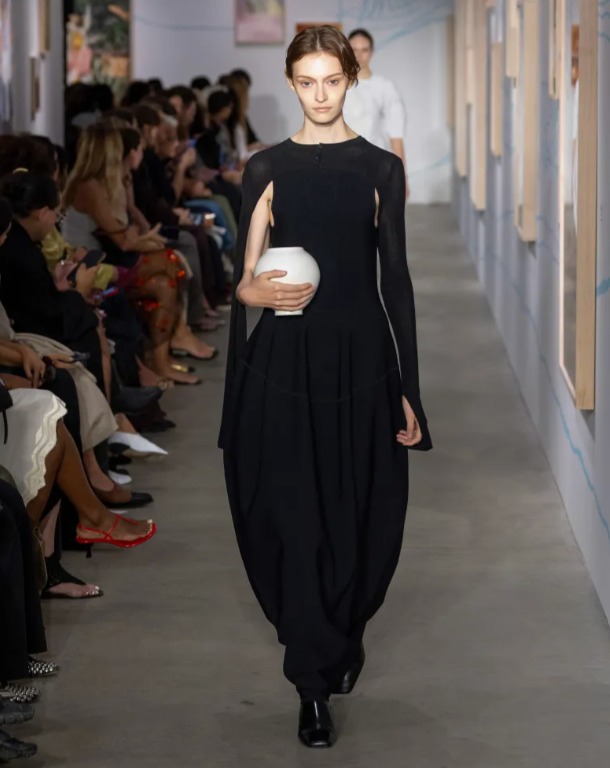
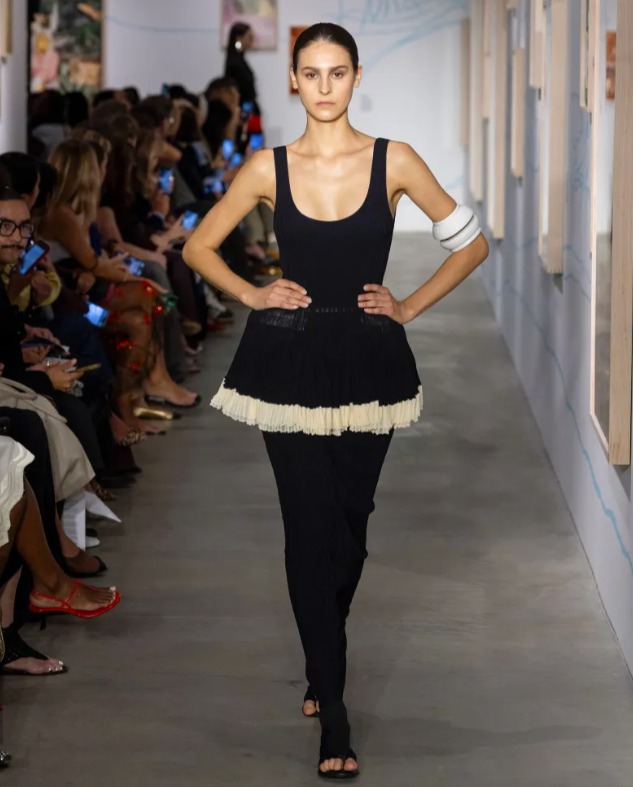
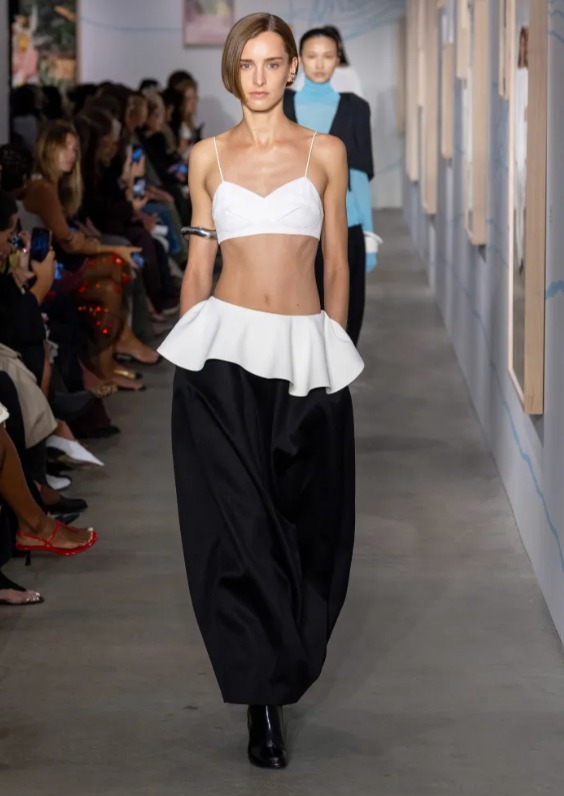
Ashlyn: The Body as a Vessel of Memory
Ashlyn Park’s Spring/Summer 2026 collection used design as a way to embody Korean culture and memory. She looked to the curved forms of traditional Korean celadon pottery, translating their fluid shapes into tailoring and knitwear that seemed to bloom around the body. The mostly monochrome palette — punctuated by red and blue — echoed Korean symbolism while emphasizing restraint and purity. On the runway, her pieces became quiet vessels of heritage, showing how clothing can hold cultural memory as much as it shapes physical form. Ashlyn’s work underscored that fashion today isn’t just about silhouette or fabric, but about carrying stories of origin and identity onto the global stage.
These are just a few of the cultural narratives that defined New York Fashion Week this season. Beyond PatBO, Diotima, Noé Bernacelli, and Ashlyn, other showcases also highlighted the power of heritage and identity on stage — from Harlem’s Fashion Row to International Heritage Fashion Week, and many more. Together, these moments underline a clear shift: fashion today is no longer only about garments, but about the stories woven into them. Audiences increasingly crave this depth — they want to connect with meaning, memory, and community through what they wear. For designers, this opens the door to create not just clothing, but cultural experiences. And in an oversaturated market, it is precisely this storytelling that allows brands to stand apart.